The Irony of Seaside Surfing
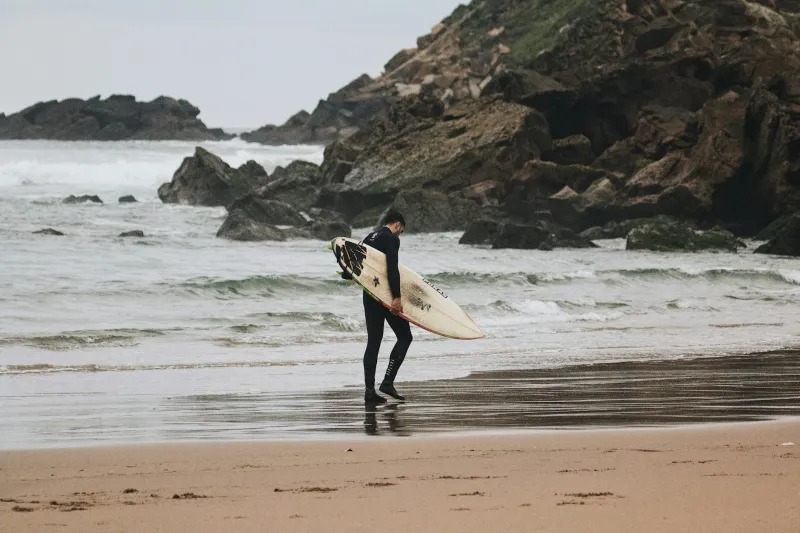
There's something beautifully absurd about Brighton's relationship with surf culture. Here's a city that lives and breathes the ocean, where salt air mingles with morning coffee and the horizon dominates every conversation about the weather, yet whose famous shingle beach offers about as much surfable wave action as a particularly aggressive puddle.
But perhaps that's precisely the point. In a city built on reinvention, where creativity flourishes in the spaces between what should be and what actually is, Brighton's surf community has created something far more interesting than traditional wave riding. They've built a culture of perpetual longing—and turned that yearning into an art form.
The Pilgrimage Circuit
Every weekend, you'll find them loading boards onto the roofs of battered Volkswagen vans and ageing Subarus, heading west towards Cornwall or north to the artificial wave pools that have sprouted across the UK like modernist temples to manufactured perfection. The Wave in Bristol, Surf Snowdonia in Wales, and the newer facilities in Scotland have become secular pilgrimage sites for Brighton's wave-starved faithful.
 Photo: The Wave, via www.travelthruhistory.tv
"It's not about convenience," explains Sarah Chen, who runs Brighton Surf Collective from a workshop tucked behind the Lanes. "If we wanted easy waves, we'd have moved to Newquay years ago. There's something about maintaining this relationship with the ocean from a place that doesn't quite give you what you need. It keeps the hunger alive."
Sarah's workshop serves as unofficial headquarters for a community that numbers in the hundreds—surfers, wannabe surfers, and surf-adjacent enthusiasts who've never actually stood on a board but live for the aesthetic, the philosophy, and the promise of next weekend's expedition.
Skimboarding: Brighton's Compromise
While the dream waves require road trips, Brighton has birthed its own indigenous surf culture through skimboarding—that peculiar art of running into shallow water and riding the film of retreating waves across the shingle. It's surfing's scrappy younger sibling, requiring less equipment, less water, and significantly more tolerance for being pelted by small stones.
The Brighton Skimboarding Society meets every Sunday morning at the groynes near the West Pier, weather permitting. What started as a handful of teenagers has evolved into a cross-generational community that includes everyone from university students to retired accountants who discovered their calling at fifty.
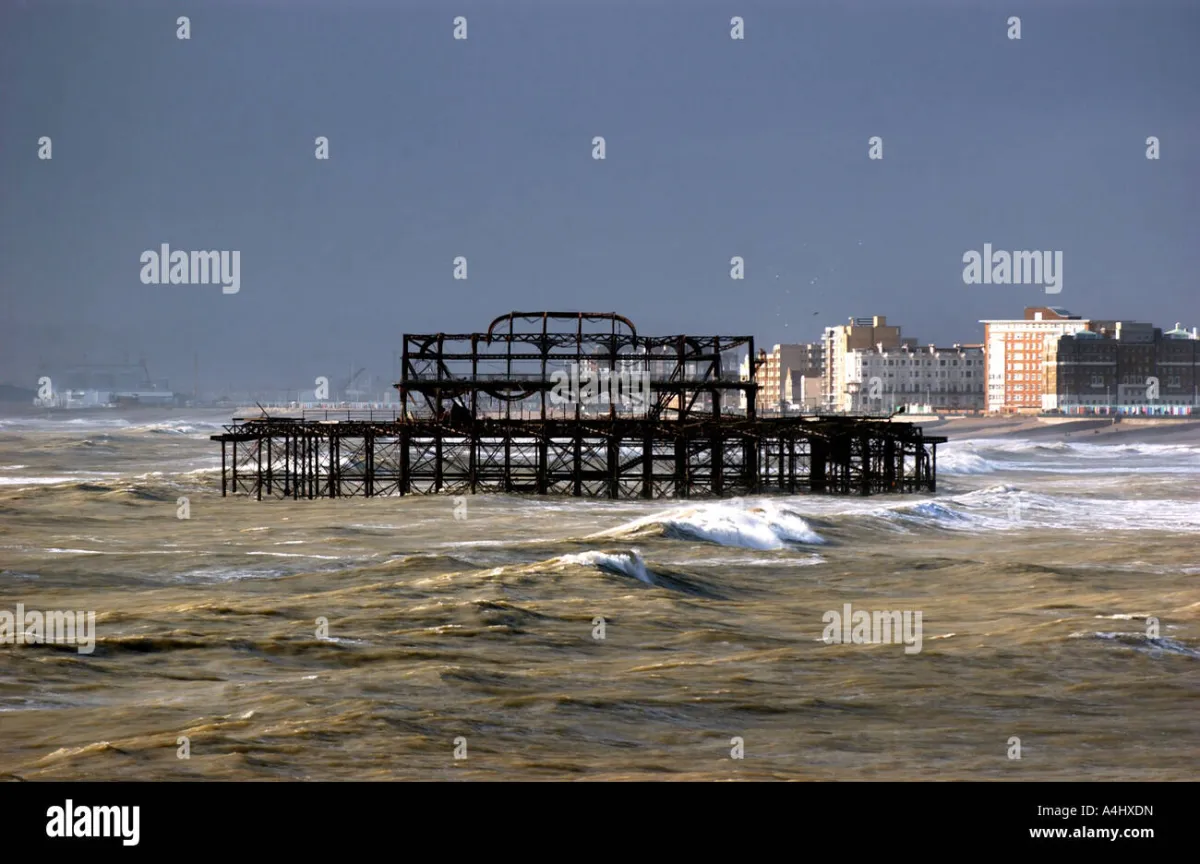 Photo: West Pier, via c8.alamy.com
"People think it's just surfing for people who can't surf," says Marcus Webb, a graphic designer who's been skimboarding for fifteen years. "But it's its own thing entirely. You're working with what Brighton actually gives you rather than wishing it was somewhere else. There's something honest about that."
The Philosophy of Almost
Talk to Brighton's surf community long enough, and you'll discover they've developed an entire philosophy around approximation and aspiration. It's a mindset that extends far beyond water sports, touching on the city's broader relationship with identity, authenticity, and the space between dreams and reality.
Local surf photographer Jamie Rodriguez has spent five years documenting this community, capturing not just the weekend pilgrimages and dawn skimboarding sessions, but the quieter moments—board maintenance in cramped flats, surf films projected onto warehouse walls, the ritual of checking wave forecasts for beaches three hours away.
"Brighton surfers have this beautiful relationship with delayed gratification," Rodriguez observes. "They spend more time thinking about surfing, talking about surfing, preparing for surfing than they do actually surfing. But that anticipation becomes part of the experience. It's very Brighton—making the journey as important as the destination."
Artificial Waves, Authentic Community
The rise of artificial wave technology has been transformative for Brighton's surf scene. Suddenly, perfect, consistent waves are available just a few hours' drive away, no weather gods required. But rather than diminishing the romance of ocean surfing, these facilities have created new rituals and strengthened community bonds.
Brighton Surf Collective organises monthly trips to The Wave in Bristol, turning the artificial lagoon into a classroom where beginners can learn without battling unpredictable conditions. Advanced surfers use these sessions to perfect techniques they'll later attempt in Cornwall's more challenging waters.
"The artificial waves are like having a rehearsal space," explains Tom Mitchell, a carpenter who learned to surf at forty-three. "You can work on specific moves, build confidence, then take that to the real ocean. It's not replacing natural surfing—it's making us better at it."
The Wetsuit Brigade
Perhaps no group embodies Brighton's surf obsession more than the year-round swimmers who treat the English Channel like their personal training ground. These hardy souls, many of whom also surf, maintain an intimate relationship with Brighton's actual waves—such as they are.
The Brighton Swimming Club has members who've been entering the water every morning for decades, tracking tides, temperatures, and the subtle variations in wave behaviour that most visitors miss entirely. They're the keepers of local ocean knowledge, understanding that Brighton's waters, while not surfable in any conventional sense, have their own rhythms and rewards.
"You learn to read the sea differently here," says veteran swimmer Pat Sullivan. "It's not about catching waves—it's about understanding the water's moods, respecting its power even when it seems gentle. That knowledge makes you a better surfer when you do travel for waves."
The Future of Landlocked Surfing
As Brighton continues to evolve, its surf community adapts with characteristic creativity. Plans for new artificial wave facilities closer to the south coast could transform the scene, potentially reducing the pilgrimage element that currently defines it. But community leaders aren't worried about losing their identity.
"Brighton surf culture was never really about the waves," reflects Sarah Chen. "It's about maintaining a relationship with the ocean from a place that demands creativity, patience, and a sense of humour about your own limitations. Those qualities aren't going anywhere."
In a city where reinvention is the only constant, Brighton's surfers have created something uniquely their own—a culture built not on what they have, but on what they dream of having, and the beautiful tension that exists in the space between the two. It's very Brighton, and very, very human.