The Palette Beneath Our Feet
There's something magical happening in the studios scattered across Brighton's creative quarters. While London's galleries chase the next conceptual trend, a quiet revolution is taking root here on the south coast—one that draws its power not from theory or politics, but from the very ground we walk on.
Step into Sarah Mitchell's converted railway arch studio in Kemptown, and you're immediately struck by the walls lined with botanical prints that seem to pulse with life. Each piece captures the wild beauty of Brighton's coastal grasslands—the delicate purple spikes of viper's bugloss, the golden cascades of gorse that flame across the downs each spring.
"I spent years trying to make 'important' art in London," Sarah tells me, her hands still stained with the green ink she uses to capture sea kale's distinctive leaves. "But it wasn't until I moved here and started really looking—I mean really looking—at what was growing around me that my work found its voice."
Beyond the Postcard Pretty
This isn't about chocolate box landscapes or tourist-friendly seascapes. The artists leading Brighton's nature-inspired renaissance are digging deeper, finding profound meaning in the intersection of human experience and natural environment. They're part of a broader national conversation about belonging, identity, and our relationship with the British landscape that feels particularly urgent in our increasingly urban age.
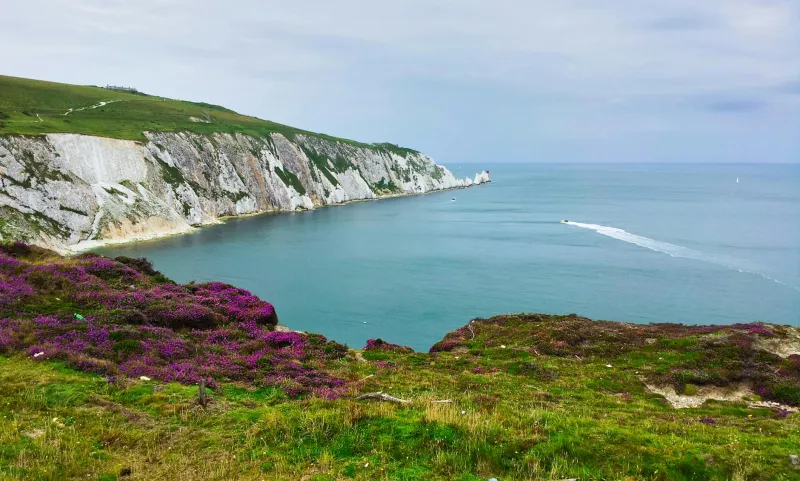
Take printmaker James Hartwell, whose intricate linocuts transform the chalk cliffs into abstract geological poetry. Working from his shared studio near the Level, James creates pieces that capture not just the visual drama of our coastline, but its temporal weight—the millions of years compressed into those white faces that guard our shore.
"The chalk tells stories," he explains, showing me a print where ancient fossils emerge like ghosts from sweeping cliff formations. "Every piece I make is about time—deep time, human time, the time it takes for water to carve stone."
The Downs as Muse
It's impossible to discuss Brighton's landscape-inspired art movement without acknowledging the South Downs' profound influence. These rolling chalk hills, now protected as a National Park, provide both literal and metaphorical elevation for artists seeking perspective on modern British life.
Illustrator Emma Chen discovered this firsthand during the pandemic lockdowns, when daily walks on the downs became her lifeline. Her subsequent series 'Chalk Lines' maps the subtle seasonal changes across Devil's Dyke and Ditchling Beacon through delicate watercolour studies.
"People think the downs are just green hills, but they're incredibly complex ecosystems," Emma explains, pointing to a painting that captures the intricate relationship between grazing sheep and the wildflower meadows they help maintain. "There's this beautiful symbiosis that reflects something essential about how we might live more thoughtfully."
Coastal Conversations
The sea's influence on Brighton's artistic identity hardly needs stating, but the current generation of nature-focused creatives are finding fresh ways to engage with our maritime heritage. Rather than romanticising the waves, they're exploring the liminal spaces where land meets water—the shifting shingle, the salt-tolerant plants that thrive in harsh coastal conditions, the constant negotiation between human settlement and natural force.
Ceramic artist David Kowalski creates vessels inspired by the forms he finds along Brighton beach—not the obvious shells and pebbles, but the more subtle textures: the way dried seaweed creates natural basketry, how salt crystals form geometric patterns on driftwood, the flowing lines left by retreating tides in sand.
"The beach is this incredible laboratory of form and texture," David says, handling one of his pieces—a bowl whose rim echoes the irregular curves of wave-smoothed glass. "Every tide brings new inspiration."
Growing a Movement
What makes Brighton's nature-inspired art scene particularly exciting is its collaborative spirit. The monthly 'Chalk and Tide' gatherings bring together artists working with natural themes, while the annual 'Downland Dialogues' exhibition showcases work that explicitly engages with local ecology.
This isn't just about individual artistic expression—it's about building a community of practice that takes environmental awareness seriously while creating genuinely compelling art. Gallery owner and curator Rachel Stevens, who's championed many of these artists through her space in the North Laine, sees broader significance in the movement.
"These artists are asking fundamental questions about place and identity that resonate far beyond Brighton," she notes. "In a time of climate anxiety and urban alienation, they're showing us ways to reconnect with the natural world that feel authentic rather than escapist."
Seeds of Change
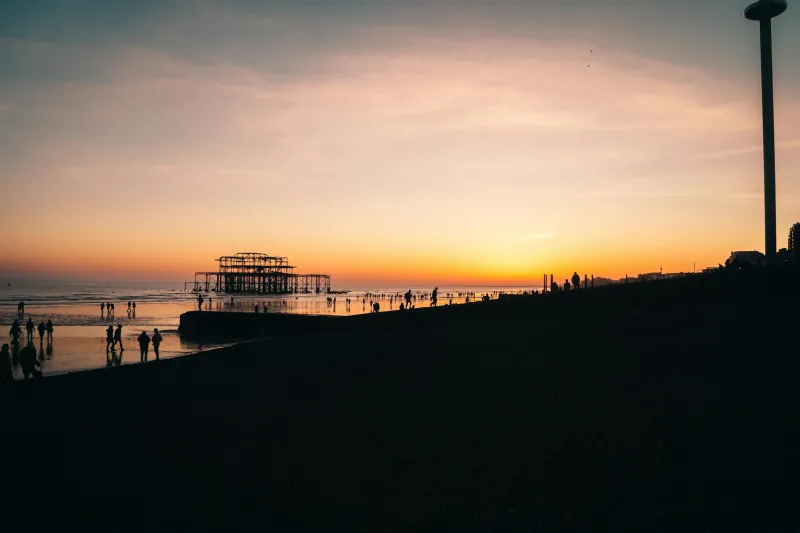
As I write this, looking out over the grey November sea from my flat near the West Pier, I'm struck by how this artistic movement reflects something essential about Brighton's character. We've always been a city that looks both inward and outward—to the continent across the water, but also to the ancient landscape that cradles us.
The artists profiled here aren't just making beautiful work (though they absolutely are). They're participating in a larger cultural shift toward valuing our immediate environment, finding the extraordinary in what we might otherwise take for granted. In doing so, they're helping define what it means to be rooted in place while remaining open to the world.
In an age of global connectivity and urban homogenisation, Brighton's nature-inspired artists remind us that the most universal truths often emerge from the most specific observations. The chalk beneath our feet, the wildflowers in our verges, the endless conversation between sea and shore—these aren't just scenic backdrops, but active participants in the ongoing creation of culture.
And that, perhaps, is the most beautiful art of all.