The Vintage Capital by the Sea
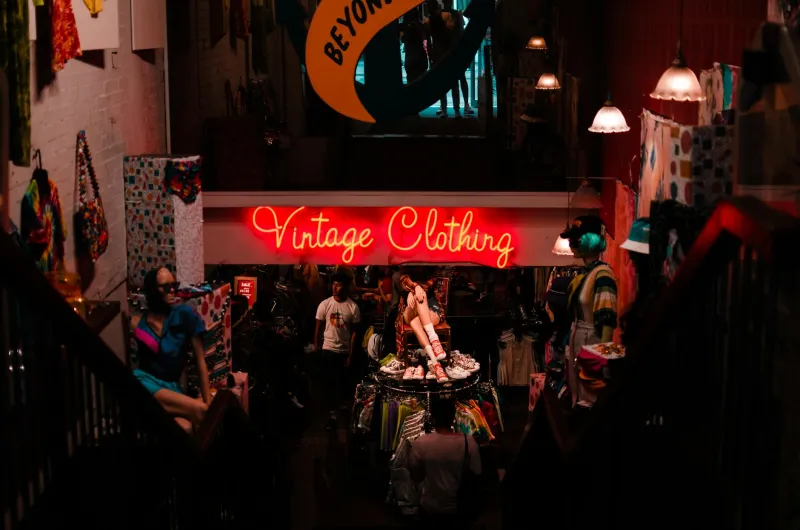
Step off the train at Brighton station on any weekend, and you'll witness something extraordinary. Streams of fashion pilgrims armed with tote bags and determined expressions make their way towards the city centre, drawn by whispers of vintage Vivienne Westwood hiding in charity shops and 1970s band tees waiting to be discovered in basement boutiques. Brighton hasn't just embraced vintage clothing – it's become the undisputed cathedral of secondhand style in Britain.
What started as a handful of quirky shops tucked between fish and chip joints has blossomed into a sprawling ecosystem of vintage dealers, upcyclers, and style archaeologists. The city now boasts over 200 shops dedicated to pre-loved fashion, from the rabbit warren of The Lanes to the bohemian stretches of Sydney Street. It's a density unmatched anywhere else in the UK, and it's turning Brighton into fashion's most unexpected influencer.
Beyond the Buzzwords: A Cultural Identity
Whilst the rest of Britain catches up with sustainability speak and circular fashion rhetoric, Brighton has been quietly living these values for decades. But here's the thing – this isn't about worthy environmental messaging or guilt-driven consumption. Brighton's relationship with vintage clothing runs far deeper, weaving itself into the very fabric of the city's rebellious DNA.
"We've never seen vintage as second-best," explains Sarah Chen, who runs three vintage boutiques across the city. "Here, wearing someone else's cast-offs is a badge of creativity, not compromise. It's about finding pieces with stories, with character – something you simply can't get from the high street."
This philosophy permeates everything from the city's legendary club nights, where vintage finds become costume statements, to its thriving creative industries, where fashion students and artists hunt for inspiration among racks of forgotten garments.
The Treasure Hunters
Brighton's vintage scene thrives because of its passionate custodians – the shop owners, stylists, and dealers who treat clothing archaeology as both art and obsession. Take Marcus Webb, whose Kemptown shop 'Decades' has become legendary among fashion insiders. Webb doesn't just sell clothes; he curates experiences, matching customers with pieces that seem destined for them.
"I've had people cry when they find the perfect 1960s coat," Webb confides. "It's not just about the garment – it's about connecting with something authentic in a world of fast fashion fakery."
Then there's the charity shop circuit, elevated to an art form by Brighton's thrifting community. Local Instagram accounts dedicated to charity shop finds have thousands of followers, turning secondhand shopping into a spectator sport. The city's volunteers have developed an almost supernatural ability to spot designer pieces amongst the donations, creating treasure hunts that draw fashion students from London's top colleges.
Setting the National Agenda
Brighton's influence on British fashion extends far beyond its city limits. Trends that emerge from the city's vintage boutiques consistently filter into mainstream fashion within months. The recent resurgence of 1990s minimalism? It started in Brighton's vintage shops two years ago. The current obsession with 1970s bohemian styles? Brighton dealers were stocking up on peasant blouses and flared jeans whilst London was still fixated on athleisure.
"We're like fashion's early warning system," laughs vintage dealer Emma Rodriguez. "What sells well here ends up in Zara's design meetings six months later."
This prescient quality has made Brighton a pilgrimage destination for fashion buyers, stylists, and influencers. Major fashion magazines regularly send teams to scour the city's shops, whilst celebrity stylists maintain relationships with key dealers to secure pieces for red carpet moments.
The Economics of Authenticity
Brighton's vintage economy is worth an estimated £15 million annually, supporting hundreds of jobs and drawing over 2 million fashion-focused visitors each year. But beyond the numbers lies something more significant – a complete reimagining of how fashion retail can work.
Unlike fast fashion's race to the bottom, Brighton's vintage scene operates on principles of scarcity, authenticity, and craftsmanship. Customers travel from across the UK not for convenience or low prices, but for the thrill of discovery and the guarantee of uniqueness. It's a model that puts creativity and individuality at its heart, challenging fashion's homogenisation.
The Future of Fashion's Past
As Brighton's vintage scene continues to evolve, it faces new challenges. Rising rents threaten some of the smaller independents that gave the scene its character, whilst the popularity of vintage has driven up prices for certain eras. Yet the city's fashion ecosystem shows remarkable resilience, constantly adapting and innovating.
New initiatives like clothing swaps, upcycling workshops, and vintage styling services are keeping the scene fresh. Young entrepreneurs are finding creative ways to blend digital marketing with physical retail, whilst established dealers mentor the next generation of vintage obsessives.
More Than Fashion
Ultimately, Brighton's vintage clothing revolution represents something more profound than fashion trends or sustainable shopping. It embodies the city's fundamental belief that the past should inform the future, that individual expression matters more than conformity, and that true style comes from creativity rather than credit cards.
In a world increasingly dominated by algorithmic recommendations and mass-produced mediocrity, Brighton's vintage scene offers something genuinely radical – the chance to dress like nobody else, to wear history on your sleeve, and to find beauty in the discarded and forgotten. It's fashion as archaeology, shopping as storytelling, and style as rebellion.
And that, perhaps, is why the rest of Britain can't stop watching what Brighton wears next.