Where Deck Chairs Meet Dance Floors
The morning mist is still clinging to the pebbles when Sophia Martinez arrives at her pop-up beach club, arms laden with bluetooth speakers and a crate of locally-sourced kombucha. By sunset, this unassuming stretch of Brighton's coastline will pulse with house music, cocktail shakers, and the kind of sophisticated beach culture more commonly associated with the Balearics than the British seaside.
"People said we were mad," laughs Martinez, co-founder of Salt & Sound, one of several pioneering ventures reshaping Brighton's relationship with its shore. "British people don't do beach clubs, they said. Too cold, too unpredictable. But Brighton's always been different, hasn't it?"
Indeed it has. While traditional seaside resorts across Britain struggle with declining visitor numbers and dated attractions, Brighton's coastal entrepreneurs are writing an entirely new playbook. They're taking inspiration from Mediterranean beach culture but filtering it through Brighton's distinctly anarchic spirit, creating something uniquely British in the process.
The New Wave
The transformation didn't happen overnight. It began with a handful of creative types who noticed something curious: Brighton's beach was criminally underused outside the traditional summer months. Despite the city's year-round cultural energy, the seafront often felt disconnected from the vibrant communities just streets inland.
Enter the pioneers. Tom Richardson, a former London club promoter, started hosting "Sunrise Sessions" – early morning DJ sets that drew yoga enthusiasts, shift workers heading home, and insomniacs seeking something transcendent. "There's something magical about dancing on the beach at 7am," Richardson explains, setting up decks as dog walkers emerge for their morning constitutional. "You get this incredible mix of people you'd never see in a normal club."
What started as guerrilla gatherings has evolved into a sophisticated seasonal ecosystem. Today's Brighton beach clubs offer everything from craft cocktail masterclasses to silent disco meditation sessions, pop-up restaurants serving locally-caught fish, and DJ workshops where punters learn to mix tracks with the sound of waves as their backing beat.
Beyond the Buckets and Spades
The aesthetic is deliberately anti-traditional. Where old-school British seaside culture leaned into kitsch – think candy floss, slot machines, and novelty postcards – Brighton's new beach scene embraces minimalist design, sustainable practices, and carefully curated experiences.
At Driftwood Social, another key player in the scene, founder Emma Chen has created what she calls "accidental luxury." Reclaimed wood furniture, solar-powered sound systems, and a strict no-plastic policy create an environment that feels both sophisticated and environmentally conscious. "We're not trying to recreate Mykonos," Chen insists. "We're trying to create something that feels authentically Brighton – creative, inclusive, and slightly rebellious."
The music policy reflects this ethos. Rather than importing mainstream dance anthems, Brighton's beach clubs champion local DJs, experimental sounds, and sets that respond to the natural rhythm of the coast. Tidal patterns influence programming – high tide brings harder beats, while low tide calls for ambient soundscapes that blend with the retreating waves.
The Community Canvas
Perhaps most importantly, these venues are becoming genuine community spaces. Unlike exclusive members' clubs or corporate beach resorts, Brighton's beach clubs operate on principles of accessibility and inclusion. Many offer sliding-scale pricing, volunteer opportunities, and programming specifically designed for local residents.
"We're not just serving cocktails," explains Martinez. "We're creating a space where a pensioner can attend a morning tai chi class, a student can DJ their first set, and a family can enjoy Sunday lunch – all on the same patch of beach."
This community focus extends to local partnerships. Brighton's beach clubs work closely with independent breweries, urban farms, and local artists, creating an ecosystem that supports the city's creative economy while offering visitors something genuinely distinctive.
Weather the Storm
Of course, this is still Britain, and the weather remains the ultimate test of any outdoor venture. But rather than seeing unpredictability as a limitation, Brighton's beach club pioneers have embraced it as part of the experience. Sudden showers become opportunities for impromptu indoor sessions in nearby venues. Wind becomes a natural sound effect. Grey skies create dramatic backdrops for photography workshops.
"British weather keeps us honest," laughs Richardson, packing up his equipment as clouds gather overhead. "You can't rely on guaranteed sunshine, so you have to create something that works in all conditions. It makes the experience more authentic, more connected to place."
The Ripple Effect
The success of Brighton's beach club scene is already inspiring imitators across the UK. Similar ventures are emerging in Margate, Whitstable, and even more unlikely coastal locations. But Brighton's pioneers aren't worried about competition – they see it as validation of a model that could revitalise British coastal culture more broadly.
"We've proven that British people are hungry for this kind of experience," argues Chen. "Not everyone wants to fly to Ibiza for a beach club experience. Sometimes the most exotic thing you can do is rediscover your own coastline."
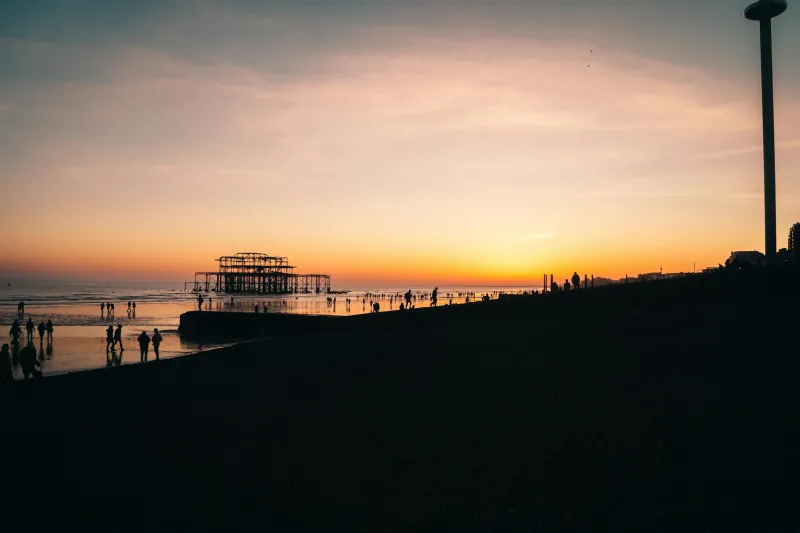
As evening approaches and the last of the day's beachgoers pack up their towels, Martinez is already planning tomorrow's programming. A sunrise photography workshop, followed by a community beach clean, then an afternoon of live acoustic music, building to an evening of electronic beats as the sun sets over the English Channel.
It's a far cry from the traditional British beach experience, but it feels entirely right for Brighton – a city that has always specialised in taking the conventional and making it extraordinary.