The Arrival Platform
Step off the train at Brighton station on any given Thursday morning, and you'll witness a peculiar migration. Amongst the tourists clutching their pier postcards and the commuters rushing to catch the London service, there's another breed entirely: the wide-eyed arrivals with overstuffed suitcases and that particular mix of terror and excitement that comes with burning your old life to the ground.
Sarah Mitchell was one of them. Three years ago, she traded her Manchester marketing career for a converted shipping container on Brighton's seafront, where she now crafts bespoke jewellery that sells to galleries across Europe. "I literally googled 'places where weird people are normal'," she laughs, silver wire twisted between her fingers. "Brighton was the first result."
The Geography of Fresh Starts
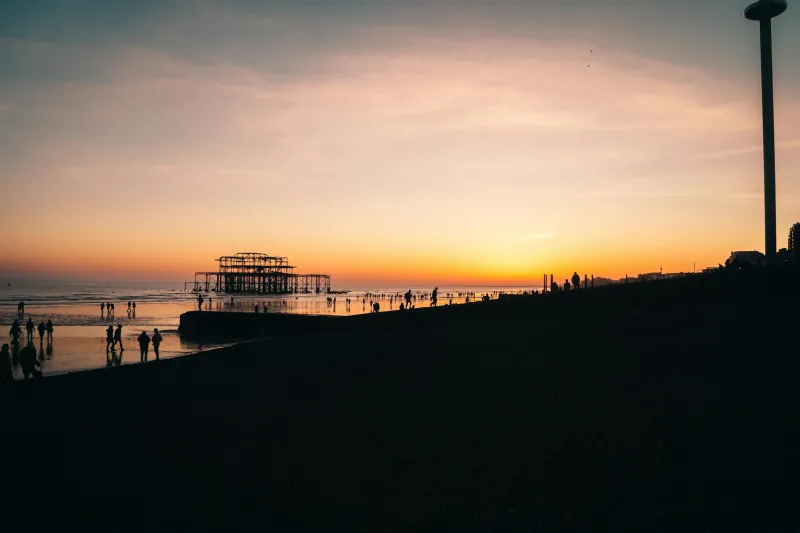
There's something profoundly symbolic about Brighton's position on Britain's southern edge – a place where the country quite literally runs out, forcing you to either turn back or leap into something entirely new. This liminal quality, perched between solid ground and endless possibility, seems to attract those ready for their own personal cliffs.
Dr Emma Hartwell, who studies migration patterns at Sussex University, calls it the "edge effect." She explains: "Brighton occupies this unique space in the British psyche – close enough to London to feel connected, far enough to feel free. It's where people come when they're ready to rewrite their stories."
The statistics bear this out. Over 40% of Brighton's population wasn't born in Sussex, making it one of Britain's most transient cities. But unlike London's economic migrants or Edinburgh's academic pilgrims, Brighton's newcomers are often fleeing success rather than seeking it – at least in its traditional forms.
The Reinvention Infrastructure
What makes Brighton particularly potent as a reinvention destination isn't just its accepting culture – it's the practical ecosystem that supports transformation. The city's abundance of shared workspaces, from the converted church studios in Kemptown to the co-working cafés of North Laine, provides affordable launching pads for new ventures.
Take the Phoenix Arts Centre, where former corporate lawyer James Chen now teaches pottery to stressed-out professionals. "In London, I was billing £400 an hour to help companies avoid tax," he reflects, clay-stained apron replacing his Savile Row suits. "Here, I charge £15 to help people find their centre. I've never been richer."
The city's rental market, while challenging, still offers options that would be impossible elsewhere. Artist collectives share Victorian houses, entrepreneurs launch businesses from beach huts, and entire careers are built in the spare rooms of strangers who understand the reinvention game.
The Permission to Transform
Perhaps Brighton's greatest gift to the reinvention-minded is its implicit permission to be whoever you want to become. The city's long history as a refuge – from Regency pleasure-seekers to 1960s mods to today's digital nomads – has created a culture where reinvention isn't just accepted, it's celebrated.
"Brighton doesn't ask where you came from," observes local historian Marcus Webb. "It asks where you're going. That's always been its superpower."
This shows up in countless small ways: the barista who doesn't bat an eye when you introduce yourself with a completely different name than last month, the landlord who accepts 'artist' as a legitimate profession, the community that rallies around your pop-up venture without demanding your CV.
The Creative Catalyst Effect
Brighton's transformation stories often involve a shift from consumption to creation. Former accountant Lisa Park now runs midnight poetry slams in abandoned warehouses. Ex-banker David Stone photographs street art for international magazines. The pattern repeats: people arrive burnt out from creating wealth for others and discover they can create meaning for themselves.
This isn't just personal transformation – it's cultural regeneration. Each reinvention story adds to Brighton's creative economy, building the very ecosystem that attracts the next wave of life-changers. It's a self-perpetuating cycle of renewal that keeps the city perpetually young.
The Cost of Constant Change
Yet Brighton's revolving door of reinvention comes with challenges. Long-term residents sometimes feel displaced by the constant influx of newcomers, and the city struggles with housing pressure as more people seek their seaside fresh start. The very success of Brighton as a reinvention destination threatens to price out the creative spaces that made transformation possible.
"There's a tension," admits city councillor Rachel Green. "We want to remain open to those seeking new beginnings, but we also need to protect the community that makes those beginnings possible."
The Ripple Effect
Brighton's reinvention stories don't stay local. The confidence gained from successfully transforming your life by the sea often ripples outward, inspiring others across Britain to question their own stuck narratives. Social media feeds fill with before-and-after stories: the Sheffield teacher who became a Brighton surf instructor, the Birmingham accountant who launched a vintage clothing empire from the Lanes.
These stories matter because they challenge Britain's traditional narratives about success, career progression, and geographic destiny. In a country where your postcode often predicts your possibilities, Brighton offers evidence that transformation remains possible at any age, from any starting point.
The Future of Second Chances
As Britain grapples with questions of identity, belonging, and purpose in an uncertain world, Brighton's role as a reinvention capital feels increasingly vital. It's not just a place where individuals transform – it's a laboratory for new ways of living, working, and being British.
The next time you're walking Brighton's seafront and spot someone staring out at the horizon with that particular mix of determination and terror, don't assume they're just another tourist contemplating the tide. They might be contemplating their entire future, standing at the edge of everything they've known, ready to leap into who they're meant to become.
In Brighton, that leap is just another Tuesday morning.