Frame by Frame: The Unsung Heroes Keeping Cinema's Soul Alive in Brighton
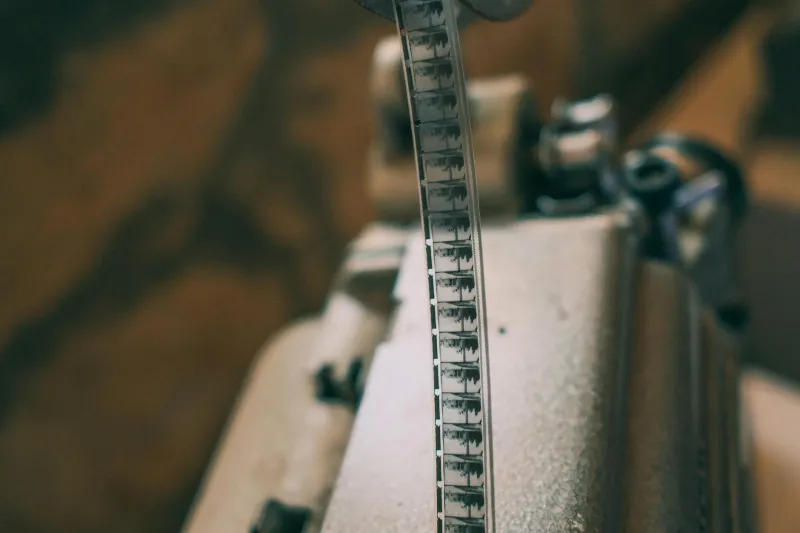
In a converted church hall in Hove, Peter Mathieson carefully threads a strip of 35mm film through a maze of rollers and gates, his weathered hands moving with the precision of a surgeon and the tenderness of a parent. The projector before him is older than most of the audience settling into their seats beyond the booth, but in Peter's care, it purrs like a contented cat.
"Digital killed the craft," he says, adjusting the focus with microscopic precision. "But it couldn't kill the magic."
Peter is one of Brighton's last traditional projectionists, part of a quietly passionate community keeping the tactile art of film projection alive in an age of streaming and digital downloads. Their work happens in the shadows — literally — but their impact on Brighton's cultural landscape is immeasurable.
The Alchemists of Light
What Peter and his fellow projectionists understand is something that's been lost in cinema's digital revolution: film projection is not just technical reproduction, but live performance. Every screening is unique, dependent on the projectionist's skill, the condition of the print, and the mysterious alchemy between light, chemistry, and time.
"You can tell a film projectionist's work immediately," explains Maria Santos, who runs monthly screenings at a community centre in Whitehawk. "The framing, the focus, the way they handle changeovers between reels — it's like a musician's touch on an instrument."
Maria learned her craft from her father, who projected films in Portugal before moving to Brighton in the 1980s. Her collection of projection equipment fills a garage in Rottingdean, each piece lovingly maintained and regularly used. "These machines have character," she insists, patting a 1960s Bell & Howell projector. "They respond to how you treat them."
The equipment these projectionists use is increasingly rare. Most cinemas discarded their 35mm projectors years ago, but Brighton's community of film preservationists has created an informal network for rescuing and maintaining these mechanical marvels. They share spare parts, trade technical knowledge, and collectively preserve skills that commercial cinema has largely abandoned.
Underground Screenings, Overground Impact
Brighton's alternative projection scene operates in spaces that mainstream cinema has forgotten: church halls, community centres, art galleries, and private homes. The Duke of York's may be the city's most famous arthouse cinema, but these smaller venues offer something different — intimacy, community, and the irreplaceable experience of film as physical medium.
 Photo: Duke of York's, via concordebgw.com
"When you watch a digital projection, you're seeing light from a computer," argues Tom Richardson, who organises monthly film nights in a Kemp Town basement. "When you watch 35mm, you're seeing light that has passed through the same piece of film that passed through the camera. It's a physical connection to the moment of creation."
Tom's screenings rarely advertise widely, relying instead on word-of-mouth and a mailing list of dedicated film lovers. The audience is eclectic — film students from the university, retired cinephiles, curious locals drawn by the promise of something different. What unites them is a shared appreciation for cinema as communal experience rather than individual consumption.
The films shown at these screenings reflect the projectionists' passion for cinema history. Forgotten British films from the 1960s, experimental works that never received commercial distribution, foreign films that exist only in battered prints traded between collectors. Each screening feels like archaeological discovery, unearthing treasures from cinema's vast and largely buried past.
The Craft and the Calling
Learning to operate vintage projection equipment is like apprenticing to a disappearing trade. There are no courses, no manuals still in print, no YouTube tutorials. Knowledge passes from person to person, accumulated through years of patient practice and countless small disasters.
"I once melted an entire reel of film because I didn't understand how the cooling system worked," remembers Jenny Walsh, who now runs Brighton's most sophisticated private cinema in a converted railway arch. "That was a £200 mistake, but it taught me more about projection than any textbook could."
Jenny's setup is extraordinary — multiple vintage projectors, a collection of over 3,000 film prints, and seating for just twelve people. Her screenings are invitation-only, but those lucky enough to attend describe experiences that commercial cinema can't replicate. The flicker of film, the mechanical rhythm of the projector, the knowledge that what you're watching is irreplaceable and ephemeral.
"Digital is convenient," Jenny acknowledges. "But convenience isn't everything. Sometimes the best experiences require effort, patience, and a willingness to engage with technology that demands respect rather than just obedience."
Community in the Dark
What's remarkable about Brighton's projection community is how it's grown despite — or perhaps because of — its apparent obsolescence. Young people, raised on Netflix and smartphones, are discovering the singular pleasure of watching films in spaces where the projection booth is visible, where the projectionist is acknowledged, where technical problems become part of the evening's entertainment rather than cause for complaint.
"There's something honest about film projection," says Alex Chen, a university student who volunteers at several screening venues. "You can see how it works, understand the process. It's not hidden behind algorithms and cloud servers. It's mechanical, comprehensible, human."
The community that's formed around these screenings extends beyond the projection booth. Audience members become friends, films spark conversations that continue long after the credits roll, and the shared experience of watching something rare creates bonds that multiplexes rarely foster.
Preserving More Than Film
As streaming services reshape how we consume moving images, Brighton's projectionists are preserving more than just vintage equipment and forgotten films. They're maintaining a relationship with cinema that values craftsmanship, community, and the irreplaceable magic of shared experience in darkened rooms.
"Every time we thread up a projector, we're keeping alive a way of seeing," Peter Mathieson reflects as he prepares for another screening. "Not just seeing films, but seeing the world. Taking time, paying attention, understanding that some experiences can't be reduced to pixels and algorithms."
Their work is quiet resistance against cinema's digital homogenisation, proof that in an age of infinite choice and instant access, there's still magic in scarcity, craft, and the patient devotion of people who understand that some things are worth preserving simply because they're beautiful.
In Brighton's hidden screening rooms, film continues to flicker through vintage projectors, each frame a small miracle of light and chemistry. The projectionists who tend these machines are more than technicians — they're custodians of wonder, keeping alive the possibility that cinema can still surprise us, if we're willing to slow down enough to let it.