The City That Architecture Built Different
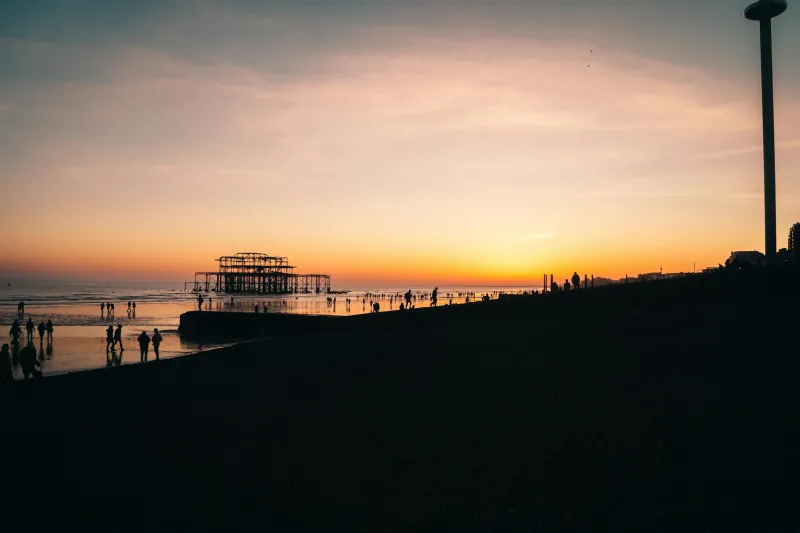
Walk down any Brighton street and you'll notice something extraordinary: every corner seems designed for the perfect photograph. But this isn't accident or Instagram-era planning. Brighton's visual feast is the result of centuries of architectural rebellion, where builders, artists, and residents have consistently refused to follow anyone else's rulebook.
"Brighton has always attracted people who think differently," explains Dr Sarah Mitchell, architectural historian at the University of Brighton. "That shows up in our buildings more than anywhere else. We've got Regency formality next to Victorian exuberance next to 1960s concrete brutalism, and somehow it all works together."
The city's architectural story begins with the Prince Regent's Royal Pavilion, that impossible confection of onion domes and Eastern fantasy that announced Brighton's intention to be unlike anywhere else in Britain. But the real magic happens in the details most visitors never notice: the way Victorian terraces cascade down hillsides in rainbow waves, the hidden mews tucked behind grand crescents, the flint-faced cottages that speak to Sussex's ancient building traditions.
The Colour Conspiracy
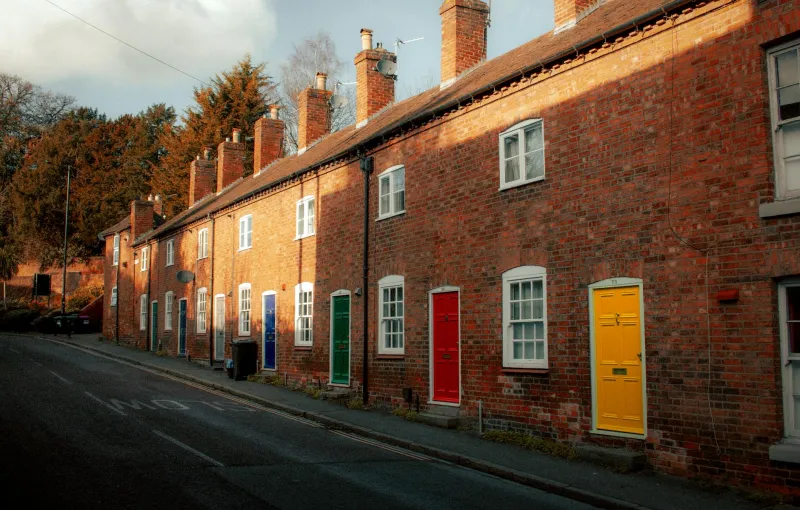
Perhaps nowhere is Brighton's architectural audacity more visible than in its approach to colour. While most British seaside towns stick to safe whites and creams, Brighton embraces the full spectrum. The famous beach huts march along the seafront in disciplined rows of turquoise, coral, and sunshine yellow, but it's the residential streets where the real colour revolution happens.
"I moved here from London twenty years ago, and the first thing that struck me was how people painted their front doors," says local artist and illustrator James Pemberton, whose work captures Brighton's architectural details. "Not just red or blue, but proper colours – lime green, hot pink, deep purple. It's like the whole city decided boring was banned."
The tradition has practical roots. Brighton's salt air and harsh coastal weather mean buildings need regular repainting, so residents began experimenting with bolder choices. What started as maintenance became a form of self-expression, creating the kaleidoscope streetscapes that define neighbourhoods like Hanover, Kemptown, and the North Laine.
Secret Spaces and Hidden Histories
Beyond the famous squares and crescents lies Brighton's secret architectural world: the network of hidden courtyards, narrow passages, and converted spaces that reveal the city's layered history. The Lanes, with their medieval street pattern, house everything from Regency shop fronts to modernist interventions, creating an architectural timeline you can walk through in minutes.
"People often ask me what makes Brighton special architecturally," says local architect Emma Rodriguez, whose practice specialises in sensitive renovations of historic buildings. "It's the way different eras talk to each other. You'll find a Georgian house with a Victorian extension, a 1930s Art Deco shop front, and a contemporary glass insertion, all in conversation."
This architectural dialogue extends to the city's approach to adaptive reuse. Former churches become arts venues, Victorian railway arches house independent businesses, and industrial buildings transform into creative spaces. The result is a built environment that feels alive, constantly evolving while respecting its past.
The Flint Revolution
One of Brighton's most distinctive architectural features often goes unnoticed: the widespread use of flint in building facades. This local material, abundant in the South Downs, creates the textured walls that give Brighton its unique character. From simple cottages to grand public buildings, flint provides a visual thread connecting the city to its Sussex landscape.
"Flint is incredibly difficult to work with," explains master craftsman Robert Davies, who specialises in traditional building techniques. "But when it's done well, it creates these amazing patterns and textures. Brighton builders developed their own techniques over centuries, creating a local architectural language you won't find anywhere else."
The flint tradition continues today, with contemporary architects incorporating the material into new builds, maintaining Brighton's visual continuity while pushing boundaries in other ways.
Living Art Gallery
Perhaps what makes Brighton's architecture most remarkable is how it functions as a canvas for ongoing creativity. Street art integrates with Victorian brickwork, contemporary sculptures nestle in Regency gardens, and residents continue the tradition of architectural experimentation through everything from garden design to shopfront creativity.
"Brighton doesn't preserve its architecture like a museum piece," notes Dr Mitchell. "It treats the built environment as something living, something that should evolve and respond to how people actually live. That's rare in British cities."
This philosophy extends to the city's approach to new development, where planners and architects work to ensure new buildings contribute to rather than compete with Brighton's architectural conversation. The result is a city where every street corner offers visual surprises, where architectural history and contemporary creativity dance together in perfect, chaotic harmony.
In a country known for its architectural conservatism, Brighton stands as proof that buildings can be both historically significant and joyfully irreverent, creating a cityscape that's unmistakably, irrepressibly itself.