The DNA of Defiance
There's something in Brighton's salty air that makes people want to break rules. Maybe it's the seaside's promise of escape, or perhaps it's the city's geography – perched on England's edge, facing Europe with its back to convention. Whatever the reason, Brighton has spent the better part of five decades proving that the most authentic creativity comes from saying "bollocks" to the mainstream.
This isn't accidental. Brighton's reputation as the UK's most rebelliously creative city wasn't built overnight – it's the result of generations of misfits, dreamers, and troublemakers who found refuge in a place that celebrates difference rather than suppressing it.
When Punk Found Its Seaside Home
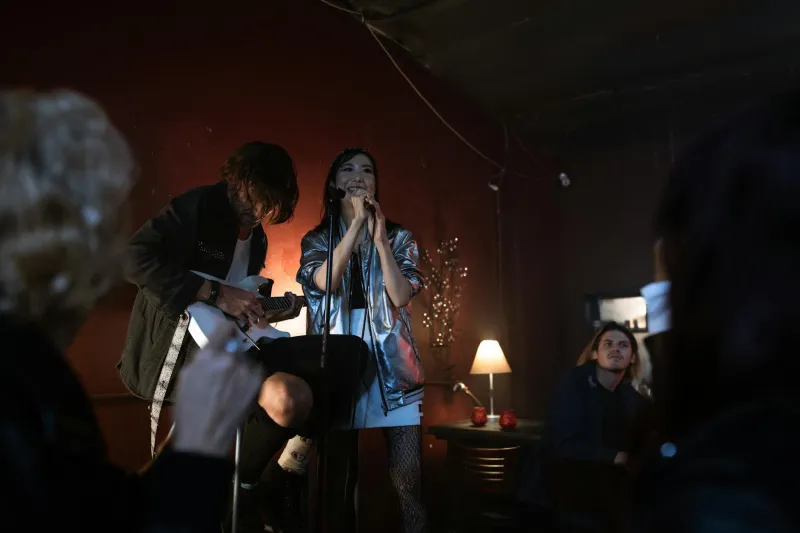
Wind back to 1977. While London's punk scene grabbed headlines, Brighton was quietly becoming the movement's spiritual seaside retreat. The city's Victorian music halls and seafront venues provided perfect stages for bands like The Cure, who cut their teeth at the Richmond pub, and Siouxsie and the Banshees, who found their sound echoing off Brighton's Victorian terraces.
"Brighton was where punk could breathe," recalls local music historian Jenny Watts. "London felt manufactured, controlled. Here, you had genuine rebellion – kids who'd escaped small towns and found their tribe by the sea."
The city's venues became legendary: the Escape Club, the Event, the Old Market. These weren't just music venues but sanctuaries where safety pins met poetry, where three-chord anthems carried the weight of genuine social commentary.
Local photographer Mike Stevens, who documented the scene, remembers: "You'd see kids who'd been bullied at school for being different suddenly finding their power. Brighton didn't just tolerate weirdness – it celebrated it."
The Rave Revolution
As punk's anger evolved into new wave's sophistication, Brighton embraced the next wave of musical rebellion: acid house and rave culture. The city's abandoned warehouses and seafront venues became temples for a new kind of creative expression – one that prioritised collective euphoria over individual stardom.
Fatboy Slim didn't choose Brighton by accident. Norman Cook recognised kindred spirits in a city that understood that the best parties happen when you stop caring what others think. His Big Beach Boutique events transformed Brighton's seafront into a massive dance floor, proving that rebellion could be joyful as well as angry.
"Brighton gets it," Cook once said. "It's always been about bringing people together, not keeping them apart."
Pride: Rebellion as Celebration
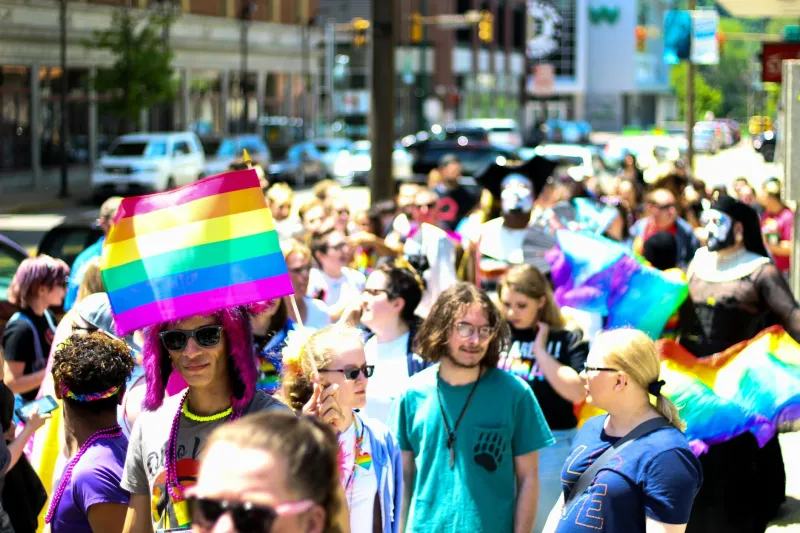
Perhaps nothing exemplifies Brighton's rebellious creativity like Pride. What started as a political protest has evolved into one of Europe's largest celebrations of LGBTQ+ culture, but it's never lost its edge.
Drag performer Miss Jason, a Brighton Pride veteran of over two decades, puts it perfectly: "Pride here isn't sanitised corporate rainbow-washing. It's still got teeth. We're celebrating, but we're also fighting – for acceptance, for rights, for the freedom to be fabulous."
The festival's success lies in its refusal to choose between politics and party. Brighton Pride manages to be simultaneously one of the UK's most important equality demonstrations and its most outrageously entertaining street festival.
Local Pride organiser Sarah Green explains: "Brighton has always been a refuge for people who didn't fit elsewhere. Pride is just the most visible expression of that spirit – but it runs through everything here."
The Drag Renaissance
Brighton's drag scene deserves special recognition in any discussion of the city's creative rebellion. Long before RuPaul brought drag to mainstream television, Brighton's pubs and clubs were showcasing performers who used gender-bending artistry to challenge social norms.
Charles Street Tap, Legends, and the Amsterdam have become pilgrimage sites for drag enthusiasts, but the scene's real power lies in its accessibility. In Brighton, drag isn't confined to specialist venues – it spills onto streets, into festivals, and across the city's cultural landscape.
"Drag in Brighton isn't just entertainment," explains performer Davina Sparkle. "It's social commentary, it's therapy, it's rebellion wrapped in sequins and served with a side of sass."
Street Art as Social Commentary
Walk through Brighton's lanes and you'll encounter another form of creative rebellion: street art that refuses to stay silent about social issues. From Banksy's early works (the artist's connection to Brighton remains hotly debated) to contemporary murals addressing everything from housing crises to climate change, the city's walls serve as an uncensored gallery.
Local street artist Zest explains: "Brighton's always been a place where you can say what you think. The walls here are democratic – anyone with something important to say can find space to say it."
The city council's relatively relaxed attitude towards street art (compared to other UK cities) reflects Brighton's understanding that creativity often requires breaking a few rules.
The Festival Explosion
Brighton's festival calendar reads like a manifesto for creative rebellion. Brighton Fringe, now the largest arts festival in England, operates on the principle that anyone can perform anything anywhere. The Great Escape showcases emerging music talent that major labels haven't yet sanitised. Even smaller events like Brighton Digital Festival and Paddle Round the Pier celebrate innovation and unconventional thinking.
"Festivals here aren't about passive consumption," notes cultural commentator Tom Richards. "They're about participation, about everyone being part of the creative process. That's very Brighton – the audience becomes the show."
The Venue Ecosystem
Brighton's creative rebellion is supported by an ecosystem of venues that prioritise artistic integrity over profit margins. The Old Market champions experimental theatre, Komedia nurtures cutting-edge comedy, and the Concorde 2 continues the city's tradition of supporting emerging music.
These venues succeed because they understand Brighton's creative DNA: take risks, support outsiders, and never underestimate an audience's appetite for something genuinely different.
Why It Matters Now
In an era of increasing cultural homogenisation, Brighton's rebellious creativity feels more vital than ever. While other cities surrender their character to chain stores and corporate developments, Brighton continues championing the weird, the wonderful, and the wilfully different.
"We're not rebelling for the sake of it," reflects local artist and activist Maria Santos. "We're fighting for the right to imagine different ways of living, of creating, of being human. That's always been political, and it always will be."
Brighton's creative rebellion isn't museum-piece nostalgia – it's a living, breathing response to a world that often feels determined to flatten human experience into profitable uniformity. In choosing chaos over conformity, celebration over suppression, Brighton reminds us that the most powerful creativity comes from the margins, from the misfits, from those brave enough to dance to their own beat.
And long may it continue to do so.