The Great Creative Migration
Something remarkable is happening in Brighton's industrial corners. Where once stood empty warehouses and forgotten railway arches, a quiet revolution is taking shape. Young designers, fresh from art schools and disillusioned with London's brutal economics, are choosing our seaside city as their creative launchpad—and they're absolutely smashing it.
The statistics tell only part of the story: studio rents a third of London prices, a 40% increase in creative businesses over five years, and waiting lists for workshop spaces that stretch months ahead. But walk through Brighton's maker districts, and you'll witness something far more significant than mere numbers—you'll see the future of British design being handcrafted, one piece at a time.
The Economics of Making
Let's be brutally honest about why London is losing its creative soul: money. Or rather, the crushing lack of it for anyone under thirty trying to establish a making practice. Ceramicist Zoe Patel discovered this harsh reality after graduating from Central Saint Martins.
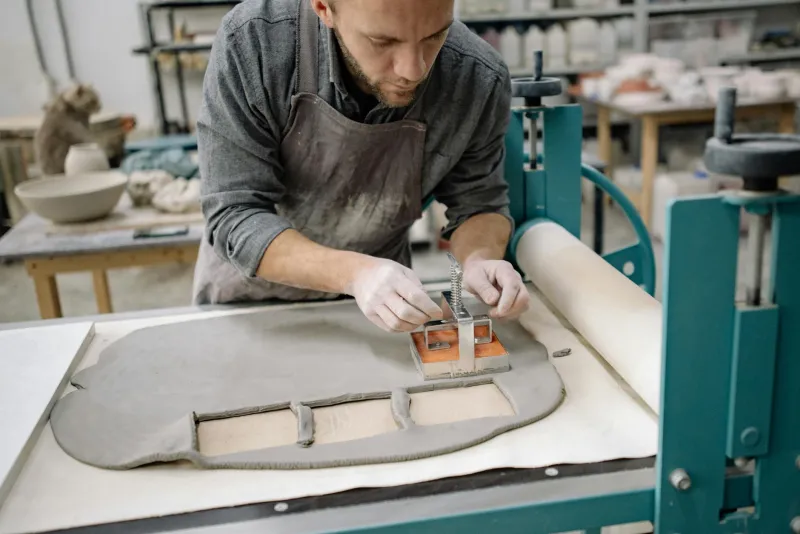
"I calculated that a basic pottery studio in Hackney would cost me £800 monthly—before clay, glazes, or kiln firing," she recalls, shaping a delicate bowl in her shared Brighton workshop. "Here, I pay £200 for a space twice the size, with natural light and a community of makers who actually want to collaborate, not compete."
Patel's story echoes throughout Brighton's maker community. Furniture designer Marcus Chen left a Shoreditch shared workspace after eighteen months of financial struggle. "London felt like creative quicksand—the harder you worked, the deeper you sank into debt. Brighton gave me breathing room to actually create."
The Collective Spirit
What sets Brighton apart isn't just affordability—it's attitude. London's maker scene often feels fractured, with individual artists guarding opportunities jealously. Brighton operates differently, fostering collaboration over competition through shared spaces, collective exhibitions, and genuine mutual support.
The Phoenix Arts Space exemplifies this spirit. Housed in a converted Victorian warehouse, it shelters thirty-seven makers across disciplines ranging from metalwork to millinery. Textile artist Priya Singh describes the dynamic: "We're constantly cross-pollinating ideas. The jeweller next door teaches me about precious metal techniques, whilst I help her understand natural dyeing processes. It's like being back at art school, but with better coffee and actual business sense."
This collaborative approach extends beyond individual studios. Brighton Makers Collective organises monthly skill-swaps, where established craftspeople mentor newcomers in exchange for fresh perspectives on digital marketing or e-commerce platforms. The result? A knowledge-sharing network that would make Silicon Valley envious.
The Customer Connection
Brighton's design-literate population provides something London's makers often lack: accessible, enthusiastic customers who understand craft's value. Local residents don't just buy handmade goods—they seek them out, celebrating the story behind each piece.
"Brightonians get it," explains furniture maker Elena Rodriguez, whose reclaimed wood pieces sell directly from her Preston Park studio. "They understand that paying £300 for a handcrafted side table isn't expensive—it's investing in local creativity, sustainable materials, and something genuinely unique."
The city's numerous independent shops amplify this connection. From the eclectic offerings at Resident Records to the curated homewares at Utility, local retailers actively champion Brighton-made goods. "We're not just selling products," notes Sarah Fletcher, owner of design boutique Uncommon Objects. "We're telling stories about the makers, their processes, and their passion. Our customers love that connection."
Beyond the Workshop
Brighton's maker renaissance extends far beyond individual success stories. The movement is reshaping entire neighbourhoods, transforming forgotten industrial areas into vibrant creative quarters. The Kemptown Works development houses over fifty makers in converted railway arches, whilst the Open Market provides affordable retail space for emerging brands.
This geographical clustering creates something magical: maker districts where visitors can watch ceramics being thrown, furniture being crafted, and textiles being woven, all within walking distance. It's retail therapy with substance, tourism with purpose.
The Sustainability Factor
Many of Brighton's young makers arrived not just seeking affordability, but alignment with their environmental values. London's fast-fashion culture and disposable design mentality increasingly conflicts with a generation raised on climate consciousness.
"Everything we create here is built to last," emphasises woodworker James Morrison, whose workshop exclusively uses reclaimed materials sourced from Brighton's demolition sites. "We're not just making furniture—we're making statements about how design should engage with environmental responsibility."
This ethos resonates throughout the community. Fashion designer Amy Chen creates limited-edition pieces from deadstock fabrics, whilst ceramicist Tom Bradley exclusively uses local clay sources. Their customers don't just buy products—they invest in sustainable futures.
The Digital Advantage
Contrary to assumptions about craft being inherently analogue, Brighton's makers are digital natives who leverage technology brilliantly. Instagram showcases their processes, Etsy expands their markets globally, and 3D printing enhances traditional techniques.
"We're not anti-technology," clarifies jeweller Katie Walsh, whose intricate pieces blend hand-forging with laser-cutting precision. "We're selective about how we use it. Technology should enhance craft, not replace it."
This balanced approach allows Brighton makers to compete internationally whilst maintaining local roots. Rodriguez's furniture reaches customers across Europe through online platforms, yet every piece is still hand-finished in her Brighton workshop.
The Future is Handmade
As mass production increasingly dominates global markets, Brighton's maker movement represents something precious: proof that craftsmanship, community, and creativity can thrive in contemporary Britain. These young designers aren't just building businesses—they're rebuilding the connection between maker and user, process and product, creativity and commerce.
Visit Brighton's maker districts—from the railway arches of Kemptown to the converted warehouses of Portslade—and witness this revolution firsthand. Support local makers not just through purchases, but through engagement with their stories, their processes, and their passionate commitment to creating a more thoughtful, sustainable, and beautiful world.
The future of British design isn't being shaped in corporate boardrooms or fashion capitals—it's being handcrafted in Brighton's workshops, one beautiful piece at a time.